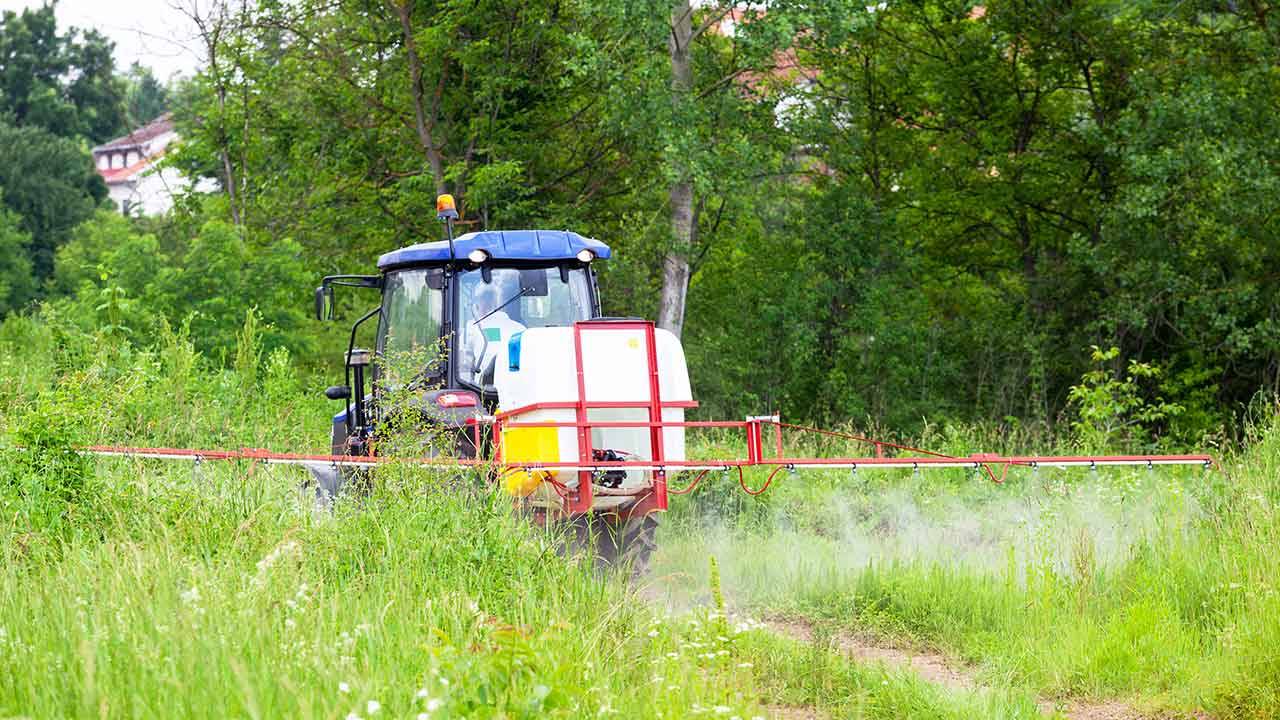
“I want to let the ‘Flying Tigers’ fly up and let the ‘rice leafhoppers’ come down.” At the end of August, it was the critical point of late rice pests and diseases. At the Guobing Agricultural Machinery Cooperative in Chuanxing Village, Paitou Township, Xiangtan County, Hunan Province, Zhang Aiguo, a large grain grower, was busy repairing plant protection aircraft. He gave his agricultural aircraft plant protection team a resounding name: “Flying Tigers”.
After “trouble”, Zhang, who knows a little about mechanical technology, let the plant protection aircraft fly over the rice fields. After the second brewing of late rice, the insecticidal effect was obvious, and other “service orders” were also delivered. Seeing that the “Flying Tigers” have great potential, Zhang plans to call on several plant protection aircraft for the second brewing of late rice by mid-September, truly realizing “seizing grain from insects”.
Application status: large grain growers explore the use of plant protection machinery
Hunan is a “big rice province”, but rice is also attacked by pests and diseases. Many places in Hunan have experienced the “pain of insect disasters”.
In 2010, Hunan Province lost 462 million jin of rice due to the black-streaked dwarf disease of southern rice alone. Liuyang Agricultural Insurance paid more than 14 million yuan for more than 30,000 mu of rice fields that lost their harvests. Even in the past two or three years, the annual loss of rice due to pests and diseases has reached 500,000 tons.
Last year, we fought against drought, and this year we prevented pests. This year’s special weather of “not hot in midsummer and not cool in late autumn” makes farmers feel more terrible about “insects coming”. For Hunan’s mid-late rice, the continuous rainy weather has a high risk of recurrence of sheath blight, rice blast, and rice smut. For example, sheath blight is more serious than last year, with an area of 20.45 million mu, an increase of 6.6% over the same period last year; rice blast has the risk of becoming a disaster in some old disease areas and areas with large planting areas of susceptible varieties.
“It can be seen that if pests and diseases are not good, there will be disasters, and if they are well treated, it will reduce disasters. To achieve the goal of late rice pests, good rice pest and disease control is the key measure to achieve this goal.” Ou Gaocai, director of the Hunan Provincial Plant Protection and Inspection Station, said that in the process of pests and diseases, plant protection work needs agricultural equipment to support it. At present, the utilization rate of plant protection mechanization in Hunan is still relatively low, and there is still a lot of room for development.
The relevant person in charge of the Hunan Provincial Agricultural Machinery Bureau told reporters that among the six links of full mechanization, the rate of mechanical plant protection is relatively lower. At present, more than 50 service organizations have purchased 60 single-rotor models and 40 multi-rotor models, with an operating area of 280,000 mu.
How to mobilize farmers to carry out mechanized plant protection? The practice of Xiangtan County Agricultural Machinery Bureau is to mobilize large households to demonstrate and drive. Zhang Aiguo is the first person in Xiangtan to “eat crabs”. In April last year, he spent 210,000 yuan to buy an agricultural micro-plant protection aircraft in Xiangtan. Last year, he completed more than 8,300 mu of operations and earned nearly 200,000 yuan. Excluding costs, the net profit was nearly 100,000 yuan. After tasting the sweetness, Zhang saw the potential of the “flying pest control” market. He wanted to buy a few more, but the cost was too high. So within a year, he ordered 30 miniature agricultural plant protection aircraft in three batches, and assembled them by himself. He has successfully assembled four so far.
The five plant protection aircraft of the “Flying Tigers” played a big role in the late rice pest control war this year. In early August, Zhang Aiguo asked all five “Flying Tigers” to take charge of the plant protection operations of more than 2,000 acres of rice in the cooperative. In Zhang Aiguo’s opinion, plant protection aircraft have many advantages: first, it is “time-saving”, with high operating efficiency. It can spray one mu of land in 2 minutes, and the daily operating time can reach 4-5 hours, and the operating area can be 150-350 mu; second, it is “labor-saving”. The use of unmanned plant protection aircraft can reduce labor costs by 20 to 30 yuan per mu. At the same time, the use of plant protection aircraft can also prevent workers from heatstroke and poisoning in hot weather; third, it is “liquid-saving”. Under normal climate and good operator skills, the wine and medicine are evenly saved, and the quality of the application is better.
Farmers are worried: How to curb high costs and high failure rates?
Although plant protection aircraft “saves time, labor and liquid”, an important aspect that makes Lao Zhang “worry-free” is that the cost of purchasing the machine is high, so Lao Zhang has to resort to this last resort and has no choice but to buy accessories and assemble the whole machine himself.
The Hunan Provincial Plant Protection and Inspection Station carefully calculated that the market price of single-rotor models is 150,000 to 220,000 yuan, and that of multi-rotor models is 40,000 to 240,000 yuan. The general service life is about 300 hours, and the operating cost per mu is 14 to 18 yuan, which is 30 to 40% higher than the operating cost of other pesticide application machinery. Therefore, the service life is short and the operating cost is relatively high.
If you buy an uncertified plant protection aircraft or “buy parts and assemble them”, although the cost is lower, it brings uncontrollable hidden dangers. Take Lao Zhang as an example. Since this year, three plant protection aircraft have crashed into electric poles due to improper control and had to spend time repairing them.
Chen Yuehua, chief of the pesticide and machinery department of the Hunan Provincial Plant Protection and Inspection Station, said that according to the investigation, taking agricultural plant protection unmanned helicopters as an example, all types of models in Hunan Province have a high failure rate. Relatively speaking, the failure rate of single-rotor diesel engines is higher than that of multi-rotor motors, and the failure rate of diesel engines in some enterprises is particularly high. Hunan Province has initially counted more than 300 accidents involving drones in field operations. A service organization purchased a multi-rotor agricultural helicopter, but unexpectedly the remote control system failed during the spraying.
Behind the failure is the weakness of agricultural helicopter research and development. There is a serious shortage of talent in the research and development and application of agricultural unmanned helicopters for agricultural plant protection. The existing research and development personnel and flight controllers are basically from model aircraft enthusiasts, which inevitably leads to certain defects in the products. The production capacity of the five agricultural unmanned helicopter manufacturers in Hunan is about 1,000 helicopters per year, but the YG-1 and 3ZD-10A models developed by Hunan Bolian Aviation Technology Co., Ltd. have passed the “new product appraisal”.
Therefore, the research and development and promotion of agricultural plant protection unmanned helicopters have attracted the attention of senior officials in Hunan Province; the core technology projects have been obtained through the cooperation of industry, academia and research, and the “Key Technology Research and Demonstration Promotion of Agricultural Plant Protection Unmanned Helicopters” has been included in the major core technology projects of Hunan Province’s scientific and technological research; joint training has provided operators, and the Hunan Agricultural Plant Protection Department has established an unmanned helicopter operator training base with Hunan Aviation Vocational and Technical College and Hunan Biomechanical Vocational and Technical College, with 110 trainees currently trained.
Only in this way can we truly save worry after saving time, effort and fluid.